2021-07-26
Follow your genius closely enough, and it will not fail to show you a fresh prospect every hour. --- Henry David Thoreau
Faith typically feels like something confined to religion --- a realm of belief divorced from knowledge, belonging more to the soul than to the intellect. But does it have to be? Let's grant, for argument's sake, that faith is essential to human satisfaction. If so, we need to clarify what we mean by faith. Schopenhauer said that "faith and knowledge do not go well together in the head: they are like the wolf and a sheep in the same cage."
He saw faith as incompatible with rational thought, as the domain of religion. But I think this interpretation is too narrow. What if faith isn't exclusive to religion? What if it's an inherent human trait --- a psychological and existential necessity rather than a theological construct? Alan Watts puts it like this:
Faith is a state of openness or trust. To have faith is like when you trust yourself to the water. You don't grab hold of the water when you swim, because if you do you will become stiff and tight in the water, and sink. You have to relax, and the attitude of faith is the very opposite of clinging and holding on.
If we adopt Watts's framing, faith as surrender, then it becomes untethered from religious dogma. We already use the term this way in daily life: "I have faith in you." But what's often missed is the metaphysical significance of that usage. Faith here isn't about doctrine --- it's about relinquishing control. It's a kind of orientation toward the world that doesn't depend on proof.
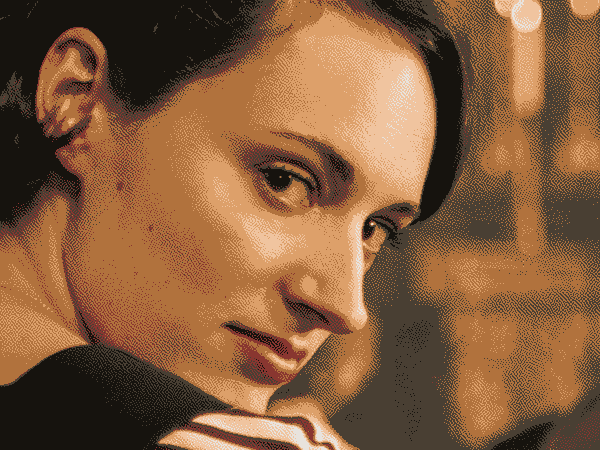
This human-centered idea of faith is captured in Season 2 of Phoebe Waller-Bridge's Fleabag. In one scene, the main character sits in a confession booth. She doesn't talk about sins in the traditional sense. Instead, she says she's afraid --- afraid of being fully responsible for her life. Afraid of choosing what to wear, what to eat, who to love, what to believe in. She says:
I just think that I want someone to tell me how to live my life, Father, because so far I think I've been getting it wrong.
Then, moments later:
I know that's why people want people like you in their lives, because you just tell them how to do it. And I know that scientifically nothing that I do makes any difference in the end anyway. But I'm still scared. Why am I still scared? Just tell me what to do, Father.
And the priest replies: “Kneel.”
This scene distills something crucial: our desire for guidance, for certainty, for permission to surrender responsibility. We want someone or something to validate our decisions, to make the uncertainty tolerable. That's what faith often becomes --- a mechanism to outsource responsibility, to shift the burden of choice onto something supposedly beyond us. But there's a danger here. When faith becomes externalized, when it's placed in an institution or a metaphysical authority, we lose sight of its human core. Religion often claims to meet this need for faith, but in doing so, it transforms the concept into something alien and ultimately inaccessible. If faith is needed for meaning, but faith is framed as inherently non-human, how can it ever be truly ours?
Schopenhauer, again, saw this clearly. In On Religion, he writes:
But he is still in his childhood who can think that superhuman beings have ever given our race information about the aim of its existence or that of the world. There are no other revelations than the thoughts of the wise, even if these — subject to error, as are all things human — are often clothed in strange allegories and myths and are then called religions.
And further:
Yet the weak point of all religions remains that they can never dare to confess to being allegorical, so that they have to present their doctrines in all seriousness as true sensu proprio; which, because of the absurdities essential to allegory, leads to perpetual deception and a great disadvantage for religion.
The problem isn't necessarily religion itself. It's the insistence that its metaphors be taken as literal truths. For many, that insistence is sufficient. The comfort it offers outweighs the inconsistencies. But for others, including myself, that's not enough. It's obvious that much of religious language is symbolic, yet few are willing to reject divinity altogether while still preserving faith in a purely human form. But we can. Faith doesn't have to be divine to be real. It can be flawed, uncertain, human, and still worth having.
Everyone wants, at some level, to be told what to do. That desire won't disappear. But we don't have to fulfill it through supernatural means. If we can reframe faith as trust in ourselves, imperfect, confused, but striving, then we can begin to carry that weight. Not without fear, but with less of it.
As Watts said, don't try to grab hold of the water. Just keep swimming. If we have faith fear will dissipate. It won't dissapear completely, of course, but that is just what it means to be human.