2026-05-09
Hemingway said good writing is true writing. A good writer can only make a story in proportion up to the knowledge of life he has. A good writer must remember what gave rise to emotion. Then, all that is left is writing it down clearly and the reader will understand.
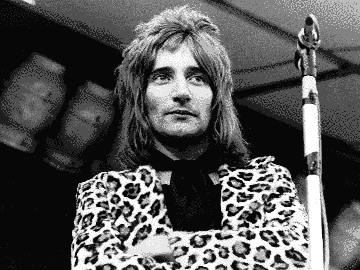
It's funny, Hemingway also said that Thomas Mann would be "a great writer if he had never written another thing than Buddenbrooks." Similarly, I think Rod Stewart would be a great songwriter if he never wrote anything after Maggie May.
First of all, it paints a pretty good story just from the first stanza:
Wake up, Maggie
I think I got something to say to you
It's late September and
I really should be back at school
We know he's schoolboy-age, and she's either not in school or older. Probably the latter. This is confirmed in a later stanza:
The morning sun, when it's in your face
Really shows your age
That don't worry me none
In my eyes, you're everything
Hemingway talks about if a writer is good at collecting what gave rise to emotions, then reading those observations give rise to the same emotions. When listening to that stanza, it feels like I'm in the bed beside her. I feel the sun. I've been there before, it's just not any before I've ever known before. It reminds me a bit of this stanza in Dylan's Simple Twist of Fate1:
He woke up the room was bare
He didn't see her anywhere
He told himself he didn't care pushed the window open wide
Felt an emptiness inside to which he just could not relate
Brought on by a simple twist of fate.
When listening to Maggie May every observation strikes me as true. Naive, for sure, but he was young when he wrote it. Doesn't make it any less true. I've met a few people like this, who are just inherently honest with who they are. At an early age I was implicitly taught that one shouldn't be too straight-forward with ones desires. It's always frustrating when I meet these people. Not because of them, of course, but because of my seeming inability to do the same. In Maggie May it just seems so simple. If school doesn't work out, he'll make a living out of hustlin' pool. That would never work, but when Rod Stewart says it you know he meant it honestly --- at least at the point in which the song was written. To people who don't work like that, like me, there's a layer of irony to everything. Question is how to strip it? Any suggestions?
The autobiographical coming-of-age song is a very niche classification, which is why I'm surprised I started thinking of one more. Peter Le Marc is a Swedish singer-songwriter, who is mostly known for his 1991 song Little Willie John. It's a song about, you guessed it, a formative relationship he had with a older women when he was younger. It's not as good as Maggie May, but it's the same niche, and it's got some great examples of the same phenomena (I'll translate them):
She lived on the wrong side of the river in an abandoned milk shop.
I was her young lover from the Stallbacka car factory.
We used to drive around in her Dodge -67.
She said: "We'll drive all night, I want to see where the roads end"
The truth of the story behind the song drive Hemingway's point home: every aspect doesn't have to be true, the observations have to be true. Hemingway writes on the importance of imagination to form whole emotional images:
When you describe something that has happened that day the timeliness makes people see it in their own imaginations. A month later that element of time is gone and your account would be flat and they would not see it in their minds nor remember it. But if you make it up instead of describe it you can make it round and whole and solid and give it life. You create it, for good or bad. It is made; not described. It's just as true as the extent of your ability to make it and the knowledge you put into it.
The real truth behind the story of Little Willie John is that it's an amalgamation of memory, images, and people. While the song tells a coming-of-age love story, the actual events are two-fold: it's about memories of his intellectual mentor during his youth and when he met his wife. All interspersed with images he got while wandering around his hometown returning after a long time away.
The passage of time can add, and take away, but it's up to the writer to make it whole.
I was reading an essay by Nabeel Qureshi, discussing what makes art great and distinct from the current generation of large language models. It is rather very good. He talks about three patterns that AI cannot currently reproduce in great art:
The most interesting point he brings up is regarding compression:
You can put this in terms of compression. A cliche illustration of, say, a vase of flowers can just be described as "imagine a New Yorker cartoon of a vase of flowers". But a really good painting of a vase of flowers can only be captured by seeing the painting itself: nothing else will substitute. Great artworks are hard to compress (i.e. have high information content); slop is easy to compress.
Language models are inherently models about how to compress language in the most efficient way possible. In fact, there's even been articles around this very notion. But, compression is lossy. Some information is lost along the way. We can ask a language model to imagine a pristine winter's day, and we're on our way to school, but no image or text will suffice as a surrogate to that experience given that information. Impressions, perhaps unconscious, reverberate through experience not usually being broadcast in text or image. They're the outliers, the spice of life if you will. It's the grace that rises above gravity.
Hemingway actually wrote about something similar, though in a different context. In his letter to Esquire, Old Newsman Writes: A Letter From Cuba, he writes about the contrast between the political writer trying to appease an already existing point of view. Or, a certain goal if you will.
The hardest thing in the world to do is to write straight honest prose on human beings. First you have to know the subject; then you have to know how to write. Both take a lifetime to learn and anybody is cheating who takes politics as a way out. It is too easy. All the outs are too easy and the thing itself is too hard to do. But you have to do it and every time you do it well, those human beings and that subject are done and your field is that much more limited. Of course the boys are all wishing you luck and that helps a lot. (Watch how they wish you luck after the first one.) But don't let them suck you in to start writing about the proletariat, if you don't come from the proletariat, just to please the recently politically enlightened critics. In a little while these critics will be something else. I've seen them be a lot of things and none of them was pretty. Write about what you know and write truly and tell them all where they can place it. They are all really very newly converted and very frightened, really, and when Moscow tells them what I am telling you, then they will believe it. Books should be about the people you know, that you love and hate, not about the people you study about. If you write them truly they will have all the economic implications a book can hold.
I know for a fact LLMs aren't in the proletariat.
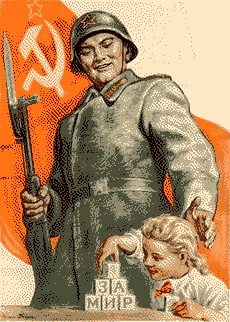
Now I'm no Luddite nor pessimist. I know it's only a matter of time before we get to the point where it's all indistinguishable. We're screwed in more ways than that, so I'm not overly worried about that specifically. But, good human writing requires that little bit extra. We need Maggie May. Which is what Nabeel concludes with:
There's a certain weight to someone having had an experience — or having imagined something — and then having written that down in this way. It's the type of weight you feel when a grandparent tells you a story that's important to them, or when someone shares something especially vulnerable that happened to them.
Cloud Atlas is a fantastic novel by David Mitchell, and an even better movie by the Wachowski sisters. I'll only be talking about the movie here, but the book is good too. I just think the movie is better.
Now, the movie is about politics. It's a story which jumps through eras and characters, with connections between eras and characters echoing throughout. A small cast plays a large cast, with wigs and prosthetics. What impact can one human being have on the future? How do ideas reverberate throughout time? What is an ocean?
I asked my local LLM of such a story. It gave me the following synopsis:
Now, that to me sounds like a super boring story. It's an inherently political story, in that it has decided before hand what type of story it is. It doesn't matter who the characters are, or what they do. It's storyline compression.
Cloud Atlas is political, but it isn't inherently political. It's a story about characters being confronted with difficult choices. What is right, and what is wrong? How do we respond to such questions, when our entire lives are on the line? And why does it matter? Those kinds of choices wouldn't really matter to somebody reading about our story without all the small details. We don't go to funerals because they're good stories. We go for the periphery. Cloud Atlas is primarily a story about those peripheries. About the beat-up trilbys. The characters themselves. The politics come with the choices we make1, from the memories we have, from our desires, not from politics.
I remember the small moments of people I have lost, which even though they might not have been the best people all of the time, still told their story of somebody who was good. Of who they really were. And these moments echo throughout me. I am not the person I am today without them.
Could we really hope any better goal for any type of fiction?