2026-05-05
Obviously we take ourselves way too seriously, that goes without saying. We think that the things we think a lot about are also interesting to others, and therefore that means something. Or perhaps we can explain it in a way that should matter to others, and therefore it is meaningful and will matter to people. Question is if we can ever make those claims and actually make the claims make sense.
Of course we can break down the things we create into smaller pieces which help form the explanation of why it was meaningful. Obviously, otherwise we would have a lot of employed people at universities analyzing literature doing nothing. And that can't be true.
"Blowing in the Wind" is about equality. That much is objectively true, I think. Now whether or not Dylan meant that by writing it, if it was his intention, is something else entirely. If we are to believe him, then he wrote the song in the back of a cab in ten minutes. And the song wasn't about something as much as it was the synthesis of a thousand songs he had listened to and remembered, and formed them into something new. Okay, not a very novel point-of-view, fair enough. But the phenomena of writing nonsense and still having it mean something to someone, now that is interesting.
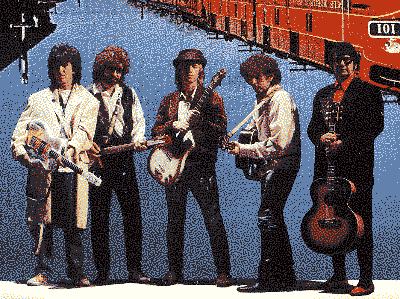
Here's Tom Petty commenting on the Travelin' Wilburys' song Margarita and Dylan's writing style:
You could give him just a word, and the line he would come up with...
It was in Pittsburgh, late one night
I lost my hat, got into a fight
I rolled and tumbled, till I saw the light
Went to the big apple, took a bite
I'd argue that the verse doesn't make much sense on the surface. But it does make sense when I listen to it. In fact, the entire song makes a lot of sense to me. Here's the lyrics in their entirety:
It was in Pittsburgh, late one night
I lost my hat, got into a fight
I rolled and tumbled, till I saw the light
Went to the big apple, took a bite

Still the sun went down your way
Down from the blue into the gray
Where I stood I saw you walk away
You danced away

I asked her what we're gonna do tonight
She said "Cahuenga Langa-Langa-Shoe Box Soup"
We better keep tryin' till we get it right
Tala mala sheela jaipur dhoop

She wrote a long letter on a short piece of paper
How does something make sense while it doesn't make sense at all? I think it's paradoxical, for sure, but only in the same sense that love is. I mean, not to be overly pretentious, but it's the same thing Anne Carson talks about in Eros the Bittersweet isn't it? How love is bittersweet: while desire is something we need to live, we can't ever hope to catch it, for then it would disappear like smoke in our hands. Yes, I know Eurydice strikes again. Doesn't she always?
To me, the song makes sense while it doesn't make sense. Which makes a lot of sense.
Just to get it out of the way: yes, I know it's obvious what the song is really about. It's not about anything. It's Bob Dylan sitting in the kitchen smoking cigarettes riffing on the word Pittsburgh, Harrison filling in with nonsense words at the last verse, and then Petty writing the last line.
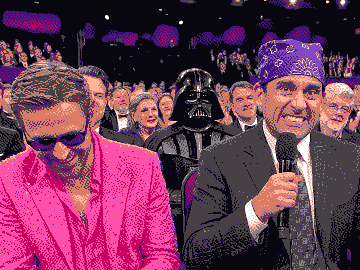
We could make an attempt to form some kind of cohesive narrative that makes sense in the context of this post. Perhaps the narrator goes to Pittsburgh, and then falls in love, loses it and tries to fight to get it back. He follows her to New York, gets her back briefly. But then, as things often goes, she writes a long letter on a short piece of paper. And scene.
That makes sense, but I preferred it when it didn't make sense.
What gets me is trying to capture those paradoxically simple observations. This eludes most who try to write, including me, except the lucky few who just get it. Right where sense and nonsense meet, now that is where you want to be with what you put out there. If something is too on-the-nose you're trying to drive your readers/listeners to a specific interpretation. If something is too abstract, nobody can connect with it. How do you walk the line, all while retaining that playful element which shines through?
It's obvious none of the Wilburys are trying to impress the listeners with anything they're writing. They're just having fun. And shouldn't that be the goal of any art form? A kind of unconsciously meaningful type of play, which arises consciously at the border of sense and nonsense?
Yes, it's pretentious and a bit on-the-nose. But come on, it's alright --- I'm doing the best I can.
In some way, much of our media is a protest against that paradox. The "best" type of media is the type of media that we can easily explain, because that means it is under our control. Why do you think superheroes are so popular? Is it because they show us how to be better people, the value in life? No, because then Superman would be the most popular superhero, and people just either make fun of Smallville or thirst over either Kristen Kreuk or Tom Welling. When media inhabits that middle ground, it's either weird & too abstract, or not deep enough, or maybe the limits of the world aren't clear enough.
Brandon Sanderson has a fantastic free course on YouTube regarding writing. But, the more I think about it, the less I like the types of stories he's talking about --- those which follow the hero's journey. I mean, Pixar movies are perfect if we're doing the dissecting game. We can find clear reasons for everything: "Why X has the perfect character introduction", "Why X is the perfect villain", "Why X is misunderstood." Replace X and the question is which fits where: ["Shrek", "Death", "God"].
Because, Disney and Pixar movies are inherently kids movies. They're not real. And it's only allowed to be escapism up to a point. Disney has realized that there's more money to be made in adults, but anyone with a liquor license could tell you that much.
When we try to explain everything, or should I say when we construct media so it can be explained, we aren't playing anymore. We're trying to control. If you remember back, did you really have the most fun playing with the kid trying to impose rules on the playground? Or, did you have the most fun playing with the kid for whom the playground was infinite and stretched far into the beyond? Yes, sometimes it sucked because the particular story wasn't good, and perhaps in those moments it was nice to go back to the kid with a buzz cut where you always knew what you were going to get, but then nothing ever happened which could surprise you. There was no reaching for the beyond. And it's gotta be honest.
Do you really think Disney is about the magic of everyday life? It's about imagining clarity and structure in something that we all know has none. All of us are just trying to get along.
And in that realization there is freedom. To play. To reach for what you've never reached for before. As long as you dare to try, and is honest all the way through. I can tell when you're not.