2022-12-11
What media depicting outcasts consistently gets wrong is that the outcast's struggle is ever winnable in the public domain. Stories sell the lie that all one must do is demonstrate truth clearly and publicly, and the world will adjust. This myth structures many narratives: the lone voice confronts a rigid authority, delivers some undeniable proof, and the crowd, previously silent, instantly realigns.
This is projection. The truth has no automatic power. Its acceptance is contingent on social convention, and convention is maintained not by clarity but by compliance. People don't believe what is true. They believe what is useful, legible, and stabilizing. We conform because it keeps the system operational, not because it makes sense. As Tomasello points out, coordination is the function of the system; belief is the lubricant so we can keep ourselves sane and believe in our own autonomy. Truth only matters insofar as it fits the machinery of social cohesion.
Feyerabend saw this clearly in the domain of science: even the most revered institutions follow practices that persist not because they are rational in some transcendent sense, but because they are institutionally self-reinforcing. The same holds for all forms of collective identity. If your thinking disrupts coordination, it doesn't matter how right you are. You become noise. And in systems calibrated for smooth interaction, noise is eliminated.
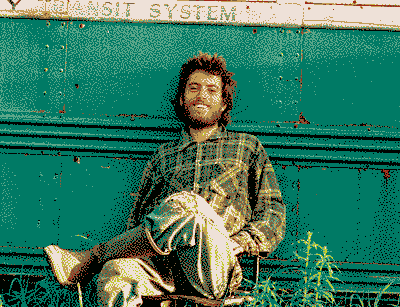
The fate of the outcast unwilling to cooperate is a tragic one. It is the fate of Kafka trapped in a small room hovering over a desk. It is the fate of millions of people trapped in an even smaller room without light and with little food, just because of the outrageous idea you had of being born. The individual who refuses to play the role doesn't get a monologue. He gets silence. His existence threatens the signal-to-noise ratio of the group, so the group ignores, mocks, or pathologizes him. The tragedy is not that his quest fails. The tragedy is that it was never even acknowledged as a quest in the first place. Only after the narrative has been re-interpreted according to the status-quo can the outsider be recognized. But that usually only happens after the individual is long gone.
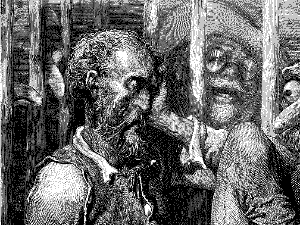
This is what is so magical about Don Quixote. The point of his quest isn't that it is impossible (it is), but that the value in following that quest is the only value that can be gathered from it; meaninglessness. It gains its meaning in isolation. It remains, and ends at the boundary of Alonso Quijano. And there is a solemn sadness in that truth. Realizing that no matter what you will do people will continue to scoff at you, laugh at you --- or worse --- ignore you if you don't follow the convention set by the particular culture you are in.
That is not to say that new ideas cannot flow, only that they are only allowed to propagate as long as they situate themselves somehow in the status-quo. As time passes and convention changes, you might have the luck of seeing that your ideas formed in the solace of your own very small part of the world are accepted. But does that matter five feet under the ground? To most people I imagine it doesn't, but to Don Quixote there isn't a doubt around: "To bear with unbearable sorrow, and to run where the brave dare not go".