2025-10-23
Let's be pessimistic for a while, let's see where the water bottoms out.
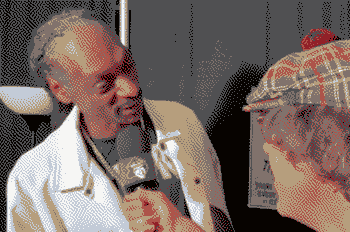
Nardwuar has interviewed Snoop Dogg 12 times. Nardwuar asks questions and Snoop answers. Snoop doesn't answer the same every time though, which obviously why would he, right? To the question "Who are you?" Snoop Dogg in 2016 answered "My name is Snoop Dogg, hip-hop gangster rapper, actor, father, football coach, philanthropist." And in 2024 he said "I am the man, the myth, the legend. Eastside Long Beach, finest you know, born and raised on the east side of the LBC, raised by a beautiful mother, great brothers, hell of a family, just --- you know --- fun guy." Is it really that easy to change who you are? Of course not, and you should know, you've tried to quite smoking ten times already. But I know, eleventh's the charm.
I know what is missing: what is missing is a system. Something scientific, p-value of <0.05, sample size larger than Netherlands, or at least Denmark. If we use the distinction between routine and habits, you want to get to the point where everything is just habit, and you want a guarantee you'll get there if you do XYZ. If you download a habit journal app tracker, if you get some sunlight which affects cortisol levels (I don't know what those are), if you find the ring and turn invisible... The issue isn't the system, it's the fact you can't convince yourself that most of the things you've learned are false, because that would say something about you. The issue with changing yourself isn't where you're going but where you start from.
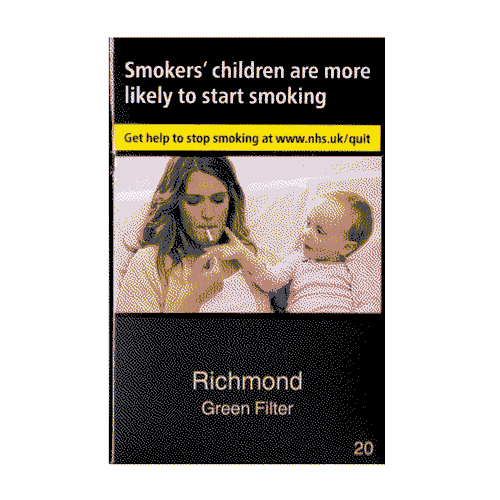
And I'm not thinking of the obvious thing: "Children of smokers' are more likely to start smoking..." True, obviously, but the inherited habit is not the interesting part. The interesting part are the inherited defenses, the mechanism of response to some type of psychological crisis. What do you do when you are stressed? Sad? Angry? There is the way you'd like to respond and then there's the way you actually respond. Maybe you reach for a drink, a cigarette---an escape. Maybe you're one that confronts what makes you uncomfortable. You take the confrontation head on, and make an effort to change --- to act. If you are the latter, I suspect quitting smoking is relatively easy for you. If you are the former, it seems you only can try to replace it. Yes, I know, I also wish I was the latter.
When thinking about this I go back and forth. Maybe it is primarily genetic, and something you can't change about yourself. Maybe it is primarily psychological, and it's simply a matter of rewiring some things. Again, habits are not the hard part: dealing with coping mechanisms is the hard part. When life gets tough, how did your mother and father deal with it? Yes, let's get Dr. Freud and Oedipus out here. We need something to fill that void which happens when something injures our ego. Maybe we just got fired, or dumped, or bitten by a street dog because you weren't quick enough. Given how big of an industry hypnotherapists are I think we can assume that most of us don't sit down in silence and think about how we could be better in the future, and then actually do it right afterwards. "Yes, soon... Just one episode of the Bachelor for dinner" --- I'm not judging, I'm just describing. Because one is objectively better, the question on the table if it's possible to change it.
Let's first assume it's not. What would that mean? It would mean that as somebody who enjoys oblivion as a coping mechanism1 there are two options: either be relegated to an existence like Sisyphus, trying hard to change some things, only to be back where you started a little bit later. The other option is to replace one mechanism for another, knowing consciously you're using it for that specific reason---forgetting by being so focused on something else. And there's not necessarily anything wrong with this, in fact you might make a career out of it. See 10% of professional ultra distance runners.
The consequence for our coping mechanisms being something you can change would look identical to as if we couldn't. We would still need something to do, something that makes us feel fulfilled and which is a support system for life. In practice, this looks the same to others as if the motivation had still been oblivion. Which in turn makes it easy for you to convince yourself that any change was not necessary in the first place. See previous paragraph.
So who is Snoop Dogg? Are we dealing with the same person in the ten years that has passed between the interviews, or are we dealing with two changed people? If I'd asked you the same question, would you really say you were different than you were ten years ago? Again, I'm not talking about things others see here. The fact you switched cigarettes for running, while amazing, is not what I am talking about. Same goes for ultra slimfit low-rise jeans for regular straight jeans. It might be the case you know more about yourself, but you'd be hard pressed to admit you were really someone distinctly different than you were ten years ago. There seems to be something, which might be you, might be the sum of your upbringing, there smoldering in the depths. It schemes, tries to claw its way out. And it would be so easy to let it.
So, let's all raise a glass to Snoop Dogg, he answers the questions, so we don't have to.
Ambiguous? If yes, then we're approximately the same age. ↩