2023-02-25
"who howled on their knees in the subway and were dragged off the roof waving genitals and manuscripts"
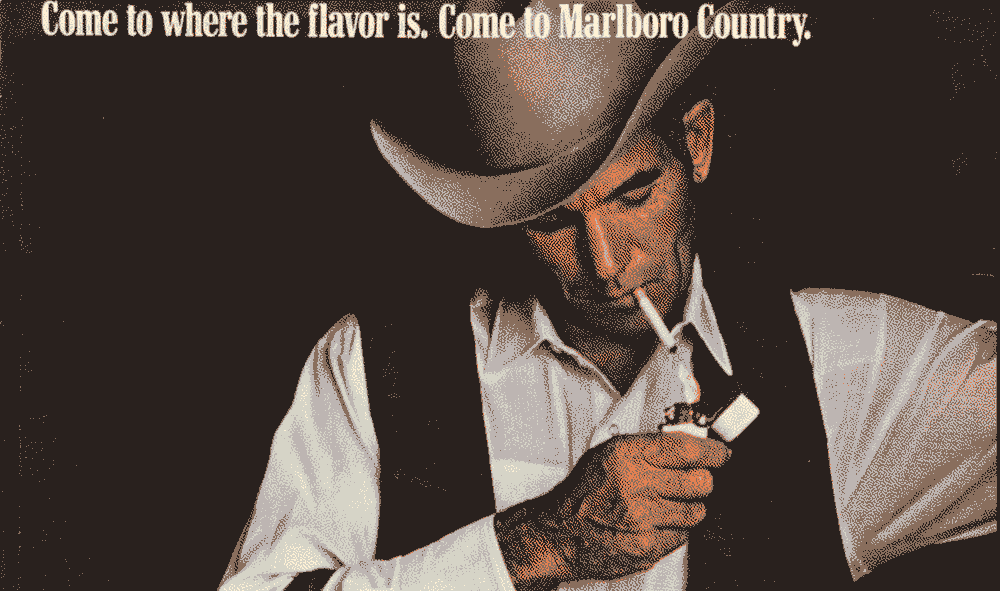
There is a phenomenon which I've thought about a bit recently, which I think can be summed up by the term "wimpiness epidemic". Now, that term brings up some nasty connotations right away, the leading assumption probably being that I am about to launch into some age-old tirade concerning how the current generation isn't "manly enough", or how chemicals in the water are turning our frogs gay, or how the new generation simply needs to pull up their boots and take a trip down to flavor country. But I mean something very different.
By wimpiness, I'm referring specifically to a kind of evasiveness in the face of personal identity. An evasiveness not rooted in humility or doubt, but in performance. We like to think that identity is the sum of what we love, the choices we've made, the accidents of genetics and upbringing. Something dynamic, organic, and chosen. But in practice, this is rarely the case. More often than not, identity is shaped as a response to an audience. Not who you are, but how you are perceived. We adopt traits, views, and aesthetics not because they reflect a coherent inner self, but because they preempt disapproval or signal alignment with a tribe. The question isn't “what do I do” but “if I do this, how will this make me look?”
Pavlovian behaviorism only gets you so far in explaining human behavior, but it explains more than we'd like to admit, especially in social contexts. Try something. Get punished. Try something else. Get ignored. Eventually, you stop trying. In a world where every performance is met with instant feedback, likes, comments, silence, you start to build yourself not on interest or intuition, but on strategy. You pick identities that are easy to digest. You learn what's safe. You stick to it. Life is hard enough as it is, I reckon.
At the risk of sounding cliche, social media is not just a venue for communication anymore. It's the architecture within which identity is formed, not just for adults but especially for those growing up1. It removes the private space for self-experimentation. Everything is immediately public, and everything public becomes market-facing. So people default to postures of ironic detachment, manufactured ambiguity, or loud allegiance to pre-approved identities. Any attempt at sincere selfhood, especially one that risks disapproval, is treated as naive or dangerous. Identity becomes curation. Self becomes simulation.
So when I call this wimpiness, I don't mean a lack of strength. I mean a capitulation to narcissistic pressures: to build a self entirely from outside-in, rather than from inside-out. Not narcissism as vanity, but as dependence. The inability to act in a manner which arises a negative response in regards to your supposed ego. And isn't that a kind of wimpiness?

The extreme polarization on social media only intensifies this. You don't just have to look good. You have to be legible. Instantly legible, and without contradiction. You can't agree with someone on one issue without being assumed to agree on all others. You can't ask a question without being assigned a position. Nuance doesn't survive the feedback loop, because nuance doesn't scale. It doesn't generate engagement. You're trained to be consistent, but not in thought.
Even writing this, I feel the grime, the slime running down my fingertips. My internal voice is saying this sounds like a Shapiro rant, or a Peterson gripe, or some kind of contrarian posturing. But this reflex isn't analytical. It's Pavlovian. It's the result of a cultural feedback loop where every utterance is judged first for tribal signaling, and only second (if at all) for substance. But this post is not about whether or not that information hierarchy is acceptable. It is about what we do as individuals in response to it.

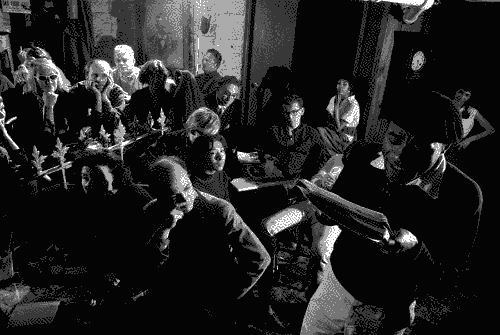
Which brings us to why I think I admire the Beats as much as I do. Not because they were good people (they weren't), but because they were unapologetically themselves. They weren't trying to be right, or liked, or safe. They were trying to be, to do what they felt like. Their failures are obvious --- misogyny (read anything of Kerouac), homophobic, self-absorption, the list goes on --- but they failed on their own terms. They weren't optimizing for legibility. They howled, typed, drank, collapsed. They didn't care that people didn't like them. They didn't care if their identity was coherent. They were not marketing themselves. They were doing something, not for consumption, but because the alternative was silence.
Truman Capote said "None of these people have anything interesting to say,' he said, 'and none of them can write, not even Mr Kerouac.' It isn't writing at all --- it's typing." It was typing. That was the point. It wasn't mediated, it wasn't staged, it wasn't flattened as a defense against the invisible audience. In a culture where everything is performative, sincerity is revolt. In a culture where identity is reduced to a series of audience-calibrated gestures, the only protest is to do something illegible.
It would make for a better story, at least.