2026-02-15
I exist as I am, that is enough,
If no other in the world be aware I sit content,
And if each and all be aware I sit content.
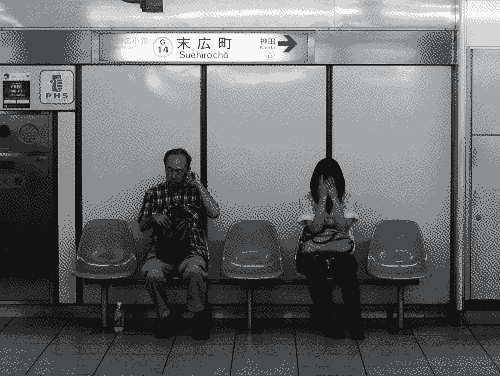
Perfect Days is a straight story about Hirayama, a straight man in Tokyo who cleans toilets for a living. He has a routine, we know that much. He finds beauty in the small things: sunlight filtered through the leaves of trees and music and those cursory glances or interactions we have with strangers at times. Is it a sad story? You could argue it is. That the final scene is hinting at him realizing the sadness in his routine, how it pushes people away, what he has missed, what he is missing by continuing to live that way. And the movie is sad. But it is not wholly sad. Hirayama doesn't cry in the end just because he is sad, he cries because while painful it is still beautiful.
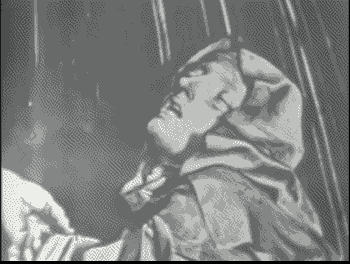
One of the most interesting choices in the film is the way it deals with endings. All story-lines in the film don't really end in a way you normally would have them end in a story. There are no character arcs, no hero's journey. Things happen, and then they just... don't. The story surrounding the co-worker is, I think, the best example of this. Takashi, Hirayama's less tentative assistant toilet cleaner, is courting a girl at a hostess club1. Takahashi's bike breaks down just as the girl arrives and he convinces Hirayama to give him a ride in his car. In the car they listen to music and Takahashi steals one of his cassettes, slipping it into his girl's purse. Takahashi then calls him a couple of days later and says he quits. His girl later returns with the tape, listens to it one more time, gives Hirayama a kiss on the cheek and leaves. We are not told what happened between them, or what happened afterwards. It is just dropped. And that is the way most things in life are: sometimes things happen, and then they just don't. Things are confusing, and painful, but if you pay enough attention2 mostly beautiful.
There is sadness there, of course. There's a reason why we want stories to have neat endings, they give us something which just can't exist in real-life (re-iterating myself here). As for Perfect Days, and Hirayama's relationship to his niece and dad, we could imagine a different movie where that is central. The climax of that movie would be that Hirayama reunites with his dad, and acquires a new relationship with his niece in the process. For that movie, see Rental Family, it's pretty good. But that isn't what happens in Perfect Days. Instead his niece leaves with her mother, the mother and Hirayama exchange a few words, and then we don't see them again. Maybe he'll reach out in the future, but who knows? So yes, there is sadness there. But there's also the beauty in what has transpired. The moments Hirayama had together with his niece throughout the movie. It is touching when she reveals she's using the camera her uncle got for her. Life is beautiful, but it is also sad because moments come and go quickly and any attempt to capture it eludes us. But that doesn't mean we won't try. Hirayama had boxes of photos for a reason.

All truths wait in all things,
They neither hasten their own delivery nor resist it.
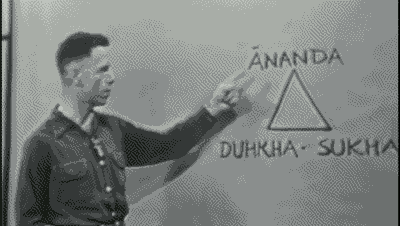
In Buddhism, they talk about duhkha (bitterness, suffering) as in contrast to sukha (sweetness, happiness). When Alan Watts presents the concept in his TV show, he presents the dichotomy as such:
Life as we live it, is fundamentally duhkha; a kind of chronic frustration. And man's effort is always to get rid of [duhkha] and go to [sukha]. But the basic idea of the Buddha was that if you have [duhkha] you must have [sukha] because these two contrast each other. You don't experience [duhkha] unless you experience [sukha], and you don't experience [sukha] unless you've experienced [duhka]. So if you go after sweetness you cannot experience sweetness unless there is always as its background the contrast of bitterness. And therefore, the objective of the Buddha's doctrine was not to get rid of pain and put pleasure in its place, but to go to something else, which stands as it were, transcending these two opposites, above and beyond---which in Sanskrit is called ananda. That word is usually translated bliss, but in a rather unusual sense. /.../ There is a poem which says under the sword lifted high, there is hell making you tremble. But go straight ahead, and there is the land of bliss.
The Straight Story is about an elderly man called Alvin Straight who rides 390km on a riding lawn mower to make amends with his estranged brother, all the way from Laurens, Iowa to Mount Zion, Nebraska. Across his travels he meets a variety of people, and he listens to their life stories, and tells his own, told against the backdrop of corn country --- a landscape of rural Americana. For David Lynch it is a rather straight story. The movie is simply what it states it is on the tin. But there is something else there. In his review Roger Ebert said that "the first time I saw 'The Straight Story,' I focused on the foreground and liked it. The second time I focused on the background, too, and loved it." Each interaction he has is cut short. There is no arc here. Does Alvin change throughout the movie? I don't think he does. Maybe we, as the audience, do a little. But that is in virtue of us interacting with Alvin, getting to know his story3, just as the strangers he interacts with in the movie. But just like the movie it is left unfinished, just two brothers gazing up at the stars.

We can make similar claims to The Straight Story as we can with Perfect Days. That it's a sad movie, about a man coming to terms with previous trauma throughout his odyssey, his fool's errand through the fields of corn. Though I don't think that's what the story is about. It's not primarily about a man with regrets. Alvin's got his share of regrets, sure, but that's not the message of the movie. It's about those moments of love which rise above those regrets. And those moments don't come with an arc, they come and go, just as the stars up in the night sky. We see Sissy Spacek's character gaze out the window as Alvin talks about the state improperly taking them away due to her intellectual disability. In that moment is she sad because she lost them, or happy because she got to have them for the time she did? And does that mean that the future is set in stone? To a story it makes more sense that way. Reality is a different story. Reality is not straight.
And these tend inward to me, and I tend outward to them,
And such as it is to be of these more or less I am,
And of these one and all I weave the song of myself.The pert may suppose it meaningless, but I listening close,
Find its purpose and place up there toward the wintry sky.

I don't think I'm Japanese enough to know what a hostess club is, but let's roll with it for now. ↩
Sometimes you can't afford that luxury, of course. Not to mention when confronted with evil. But let's avoid those for now. ↩
Of course, if you look up Richard Farnsworth's story the movie gets a different tint. Which is re-contextualized again once you hear Norm McDonald talk about it here. ↩